A message from Hawk

My maternal great-grandfather, Andy Burt, enlisted at Lincoln’s first call. He fought in the Civil War, the Indian Wars and the Philippine Insurrection, commanding a Buffalo Soldier regiment. His son was a member of the West Point class of 1896. He served in the Insurrection and twice in China, the last as the commander of the 15th Infantry “Can Do” Regiment in the mid-thirties. Hawk’s father enlisted in 1916 thinking he would serve with Pershing in France. Instead the Army sent him to West Point as a member of the class of 1920. He played end on the football team but his real claim to West Point fame was the fact that he won both the heavyweight boxing and wrestling championships on the same day. He served in World War I, World War II and Korea. One of Hawk’s sons retired as an infantry lieutenant colonel and his daughter retired from the Air Force reserve at the same rank. His other son served four tours in Iraq with the CIA.
Hawk’s West Point class graduated into the Korean War and matured in Vietnam, where he commanded a battalion in War Zone C during the Tet Offensive. That offensive began against one of Hawk’s fire support bases. In 1967 he had moved his battalion to the Cambodian Border. Then his Division ordered him to set up a second base farther east, astride a major North Vietnamese infiltration route. Division allowed Hawk to name the new base, and he called it Burt, after his great-grandfather, who had commanded a similar base on the Bozeman Trail. A week later Tet started with an attack on Burt at midnight, when two North Vietnamese Regiments and one Viet Cong began a series of human wave assaults that lasted until dawn. Several times they broke through and there was hand to hand fighting before they finally ceased. No one at Burt that night will ever forget what happened. One of the soldiers there who was wounded early on but could not be evacuated until dawn was Oliver Stone. He later wrote and directed the Oscar-winning movie Platoon based on what happened that night.
Let me offer a few thoughts about my wars: Korea and Vietnam . You see, back then my friends and I thought we were warriors. In reality we were boys who became men as we marched toward the sounds of the guns. With an eager gleam in their eyes, some even sang as they marched. All that ended in the first furious fire-fight against our fierce foes. They came at us mostly at night like a flash flood in a mountain stream: Koreans from the hills south of the Yalu, Chinese from the vast steppes of Outer Mongolia , Vietnamese fresh from victory over the French Dien Bien Phu. Driven into our lines by the whistles, drums, bugles, lights, and shouts of their leaders, they threw themselves on our barbed wire, and we used artillery, mortars, Claymores, machineguns, grenades, rifles, and bayonets to kill them by the hundreds, eventually by the thousands. After the war the North Vietnamese told us that they lost more than a million men. The number made no difference, for they had an apparently inexhaustible supply of expendable soldiers. Our guys were neither expendable nor plentiful, but in the ten years of combat in Korea and Vietnam , in places like the Chosin Reservoir and Ia Drang Valley, we lost over a hundred thousand. In the process, the gleam in our guys’ eyes changed to a blank, unfocused stare, and their hope then was to live just one more day and eventually be allowed to go home, preferably in one piece and not in a box.
\
Why were we there? Back then Washington told us we were fighting to save fifteen, perhaps thirty, million Koreans and Vietnamese from the slavery of communism. Now I tell you that the road to hell is indeed paved with good intentions. Sometimes I wonder about the intentions of those who sent us to fight in the Far East , for I remember when I was a cadet at West Point that a professor told us we should never fight a land war in Asia . The place has too much space and too many soldiers. I also recall that just before the North Koreans attacked, the American Secretary of State announced that Korea was not of interest to us. Did he induce the attack? Later another Secretary of State forecast that if South Vietnam fell the rest of Southeast Asia -- Laos , Cambodia and Thailand-- would fall like a set of dominoes. Was he a shill? Finally I remember that the Chinese and the Vietnamese have been fighting each other on their mutual border for a thousand years and their mutual hatred is deep and abiding. America ’s real enemy in Asia is neither Korea nor Vietnam : it is China . The Chinese were the ones who almost killed my father at Chosin Reservoir and twice shot down my college roommate in North Vietnam .
Sometimes late at night when the world around me is silent, asleep, and I am awake with some anonymous ache, I play the game of “what if” and I wonder what might have happened if someone in Washington had been smart enough to find a way to use Vietnamese hatred of China against the Chinese? Would that have saved fifty-eight thousand American lives? What if Truman had not relieved MacArthur? Would North Korea today be led by a nuclear armed nut case? And what if Congress had not cut off support for the South Vietnamese after we withdrew our soldiers? Would that have saved a million boat people?
\
I cannot answer those questions. So instead I offer a little prayer for more wisdom than I have seen in Washington in quite some time and for Congress to cease casually committing citizens to combat in countries far away. My hope is that fifty years from now another old colonel will not need to morn the deaths of an additional hundred thousand of America ’s finest.
Thanks for reading my ramblings. God bless.
Hawk's books

"Soldiers Never Sleep" is the story of Andy Walker, the battles he fights and the women he loves. Historical fiction, the book is about the Indian Wars, the Buffalo Soldiers, and World War Two in the South Pacific. Great warriors fill the pages, men like Red Cloud, Crazy Horse, Black Jack Pershing, and Douglas MacArthur. Along the way, Andy meets Honey, the wild Kentucky girl; Nancy, the mother of his children; and Helen, the Red Cross volunteer in the Fiji Islands. Two themes hold the story together: discrimination in the military and atrocities on the battlefield. The title is taken from an Indian curse placed on the Walker family by the old Sioux medicine man, Sitting Bull.
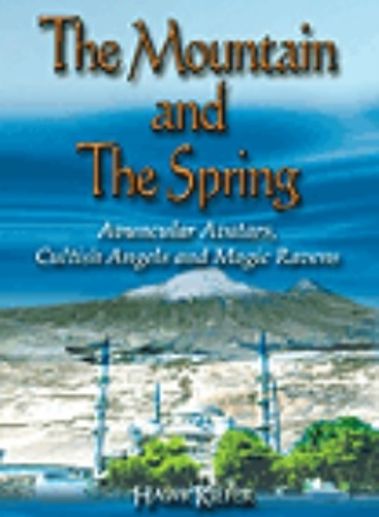
On a beautiful Greek island, Captain Beth Walker marries CIA agent Matt Price, but after her nephew, Steven, leaves the island, he is kidnapped. When Arab television shows Steven kneeling blindfolded and his captor threatening to behead him, the CIA identifies the location as Damascus, and sends Beth, Matt, and an Israeli agent to rescue him. The chase moves to Kurdistan, where an American Special Forces colonel, senior Kurdish leaders, and an avatar of the Cult of Angels agree to aid them.
Captain Beth Walker and Matt Price, a CIA agent are attacked in Jeddah. Prince Ahmad, a member of the royal family, helps them escape to Cairo. The CIA identifies their attacker as Saleh, a Yemeni terrorist, and they survive another attack. Moving to Damascus, they uncover a terrorist plan to attack Jerusalem and start a new war. Beth is captured as they enter Israel, but Matt rescues her and their relationship deepens. They thwart the attack against the Western Wall and discover that Prince Ahmad is behind the attack. They return to Saudi Arabia to confront him.
“Sandy’s War” is the story of Sandy Walker, who was born in the Great Depression, a teenager in World War II, a graduate of West Point thrown into the Korean War, and a battalion commander in Vietnam. It is also the story of Avril de Castries, daughter of a French banker and Vietnamese businesswoman, persecuted by the Japanese, orphaned by the French Legionnaires and Viet Minh, and caught up in the conflict between the United States and North Vietnam. Their relationship is played out against a rich background, including the Plains Indians, the Chinese and North Koreans, and the North Vietnamese. They compete with failures of our State Department, intrigues at the CIA, condemnation of the Sioux Indians, and emotional baggage from Wounded Knee, No Gun Ri, and My Lai.
This is the story of the Walker family. Led by the likes of Douglas MacArthur and Blackjack Pershing, the Walker men fight the Sioux, the Moros, the Japanese, and Muslim terrorists. The Walker women are attacked by Indians, an influenza epidemic, loneliness and the Depression. Their friends are the Crow Indians and the Buffalo Soldiers. From the Bozeman Trail to Mogadishue, their lives helped shape America.